
Orange Nails: A Salon-Tested Design for a Bright, Modern Manicure
Orange nails have moved far beyond basic summer polish. In the salon, orange has become one of the most versatile statement colors because it can look playful, polished, warm, minimal, or fashion-forward depending on the shade and finish.
A soft peach-orange can feel clean and wearable, while burnt orange creates a richer, more sophisticated effect. Bright tangerine delivers instant energy, and deeper terracotta tones work beautifully for clients who prefer an understated manicure with seasonal warmth.
From a professional nail artist’s perspective, the key to wearing orange confidently is choosing the right undertone, nail shape, finish, and level of detail for your lifestyle. A well-balanced orange manicure should attract attention without looking disconnected from your skin tone, wardrobe, or daily routine.
Why Orange Nails Feel Fresh and Modern
Orange is naturally eye-catching, but it does not always have to look loud. The color sits between warm red and sunny yellow, giving it enough depth to feel bold while still remaining approachable.
Clients often choose orange nails when they want something more expressive than nude but less predictable than red or pink. It works especially well during spring and summer, although burnt orange, pumpkin, copper, and terracotta shades transition beautifully into autumn.
Orange also photographs well in natural light. Glossy finishes look bright and juicy, while velvet, chrome, jelly, and matte textures create a more editorial result.
The most wearable orange manicures usually combine one strong shade with controlled detailing. Too many patterns, textures, charms, and colors can make the design feel cluttered. A professional-looking manicure often relies on clean application, balanced spacing, and a flattering silhouette rather than excessive decoration.
Choosing the Right Orange for Your Skin Tone
Orange polish can suit every skin tone, but the undertone makes a noticeable difference.
Fair skin often pairs beautifully with peach, coral-orange, soft apricot, and creamy pastel orange. These shades add warmth without overpowering the hands.
Medium and olive skin tones can wear a wide range of oranges, including tangerine, papaya, burnt orange, and warm terracotta. Saturated shades tend to look especially vibrant against olive undertones.
Deep skin tones are complemented by vivid neon orange, rich pumpkin, copper-orange, blood orange, and deep rust. High-contrast colors can create a striking, luxurious finish.
Clients with cooler undertones sometimes worry that orange will make their hands appear red. In that case, I usually recommend a balanced coral-orange or a slightly muted terracotta instead of a very yellow-based neon.
Testing the polish on one nail before committing to a full set is always worthwhile. Salon lighting can change how orange appears, so check the color near a window whenever possible.
Practical Orange Nails Versus Statement Orange Nails
Practical orange nails are designed for easy daily wear. They usually feature shorter lengths, rounded or squoval shapes, smooth finishes, and limited embellishment. Muted orange, peach, terracotta, and burnt orange are especially suitable for work, travel, parenting, or hands-on routines.
Statement orange nails use brighter pigments, longer shapes, metallic finishes, structured nail art, or contrasting accents. These designs are ideal for holidays, photoshoots, festivals, celebrations, and clients who enjoy fashion-led manicures.
Neither option is better. The right choice depends on how you use your hands, how often you can attend maintenance appointments, and how noticeable you want the finished manicure to be.
A dramatic design that does not suit your routine may become frustrating after a few days. A simpler set that complements your lifestyle will usually look better for longer.
Orange Nail Design Idea
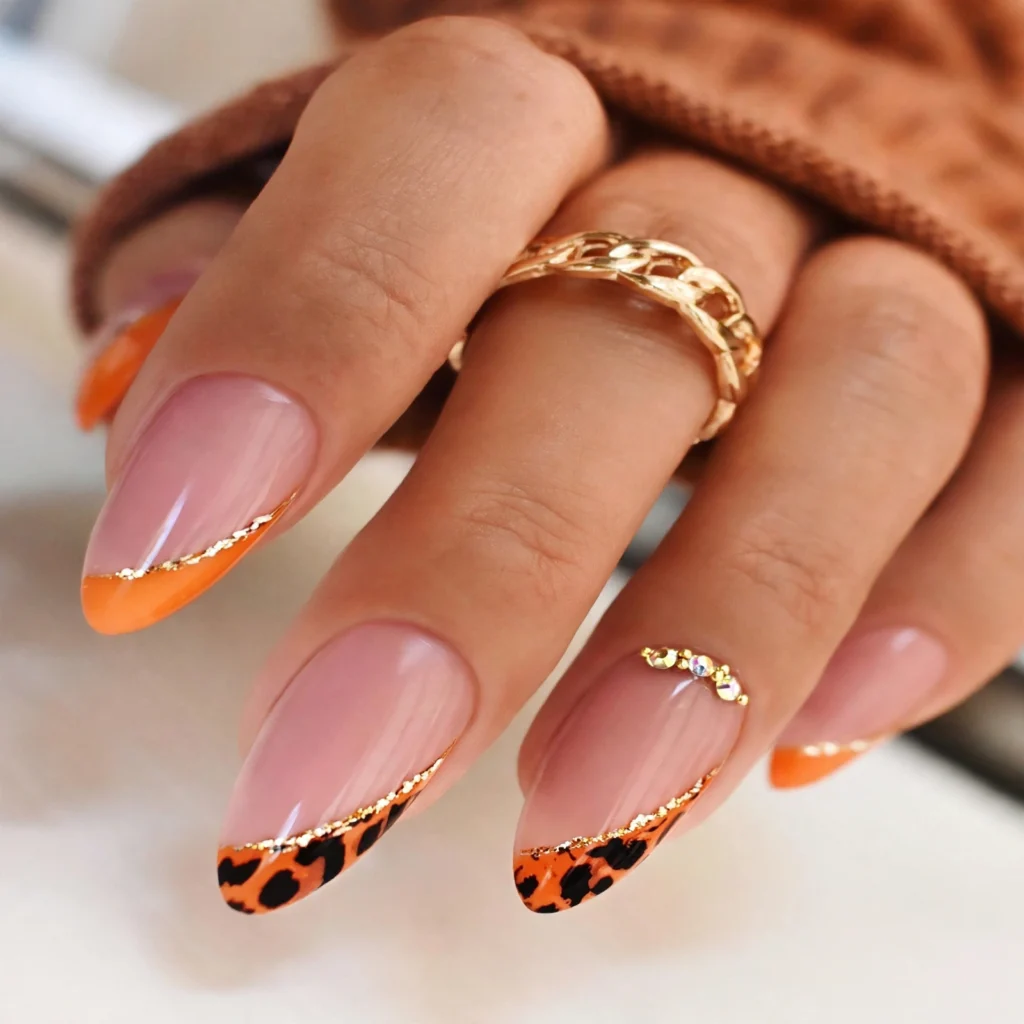
Glossy Sunset Orange Almond Nails with a Soft Gold Outline
This orange nail design uses a smooth sunset-orange base with a glossy, glass-like finish. The color should sit between warm tangerine and rich coral, creating a vibrant appearance without crossing into harsh neon territory.
A fine metallic gold outline is added near the outer edge of selected nails. The line should remain thin and delicate, following the natural curve of the nail rather than forming a heavy border. Two or three accent nails are enough to create visual interest while keeping the overall set elegant.
The finished look feels bright, feminine, modern, and refined. It works for clients who enjoy noticeable color but still want a manicure that looks clean and professionally balanced.
The glossy orange base provides the main impact, while the gold detail reflects light subtly. This prevents the design from looking flat and gives it a premium finish suitable for both casual styling and special occasions.
This manicure is especially flattering for clients who wear neutral clothing, gold jewelry, warm makeup, linen outfits, denim, white shirts, or summer dresses. It can also complement bold fashion choices because the nail art remains controlled rather than overly decorative.
For younger clients, the design can feel fresh and playful. For mature clients, the clean shape and fine metallic detail give the color a more polished, sophisticated appearance. Orange is not limited by age; application quality and shade selection matter far more.
The design can be created with gel polish, builder gel overlays, soft gel tips, acrylic extensions, or carefully prepared natural nails. On natural nails, a strengthening base coat may be necessary because orange pigments can emphasize peeling or uneven texture.
The almond shape softens the brightness of the color. It creates a tapered, elegant silhouette that makes the fingers appear longer without looking as sharp as a stiletto nail.
Clients who prefer shorter nails can adapt the concept to a soft oval shape. The gold line should then be kept extremely fine so the design does not crowd the smaller nail surface.
Tip: Choose a warm orange that looks vibrant in daylight but does not make the skin appear overly red. Ask your nail artist to test one coat before completing the full manicure.
Best for: Clients who enjoy feminine statement color, warm-toned fashion, polished summer styling, modern salon trends, and noticeable nails without heavy embellishment.
Nail shape & length: Best on medium-length almond nails, although short oval or medium squoval nails can also work. Very short nails should use minimal gold detailing to preserve visual space.
Occasion: Suitable for summer holidays, brunches, weddings, birthdays, vacations, festivals, date nights, fashion events, and stylish everyday wear.
Maintenance level: Medium. The smooth color is easy to maintain, but the metallic outline must be properly sealed to prevent lifting, fading, or catching around the edges.
Pro artist note: Apply two thin orange coats instead of one thick coat. Orange pigments can streak if overloaded. Cure each layer fully, paint the gold line with a fine liner brush, and encapsulate the detail with a durable top coat. Keep the cuticle area extremely clean because bright orange highlights uneven application more than nude polish.
How to Make Orange Nails Look More Expensive
The most important factor is not the amount of nail art. It is the precision of the manicure.
A neat cuticle area, consistent nail shape, smooth surface, and high-quality top coat immediately improve the appearance of orange polish. Bright shades expose bumps, flooding, uneven edges, and inconsistent lengths more easily than sheer colors.
Ask for thin, controlled layers. Thick orange gel can look bulky and may cure unevenly, especially when the polish contains dense pigment.
A structured base or light builder gel overlay can improve the finish on natural nails with ridges. The surface should be smooth before color application, otherwise glossy orange may emphasize every imperfection.
Gold accents should remain delicate. Large metallic stickers, thick foil borders, and excessive glitter can compete with the orange base. Fine details usually create a more refined result.
Salon Preparation for a Smooth Orange Manicure
Proper nail preparation directly affects longevity.
The nail plate should be gently cleansed, dehydrated, and prepared according to the product system being used. Cuticle residue must be removed carefully because invisible skin on the nail plate can cause lifting.
The free edge should be shaped consistently. Almond nails need balanced sidewalls and a centered tip. If the apex or taper is uneven, bright polish will make the difference more noticeable.
A compatible base coat should be applied in a thin layer. Clients with flexible or peeling nails may benefit from a rubber base, strengthening gel, or builder overlay.
Orange polish should then be applied in controlled coats. Avoid repeatedly brushing over partially leveled gel because this can create streaks and drag marks.
Longevity and Realistic Wearability
A professional gel manicure usually wears best when clients avoid using their nails as tools. Opening cans, scraping labels, prying lids, and picking at hard surfaces can cause edge wear or breakage.
The metallic detail may show damage before the solid orange base if it is not properly encapsulated. Your nail artist should cap the free edge and seal the artwork without creating excessive bulk.
Natural nail growth becomes visible around the cuticle as the manicure grows out. Because orange is a strong color, the growth gap may appear more noticeable than it would with nude polish.
Most gel clients return for removal or maintenance approximately every two to three weeks. Builder gel and acrylic clients may need infills depending on growth rate, structure, and product condition.
Do not leave lifted product in place. Moisture and debris can collect beneath lifting, and the surrounding structure may become less stable.
Nail Care Tips for Orange Nails
Use cuticle oil daily to keep the skin around the nails flexible and hydrated. Healthy cuticles make bright polish look cleaner and more polished.
Wear gloves when cleaning, washing dishes, gardening, or using strong household products. Repeated water exposure and chemicals can dull the top coat and weaken natural nails.
Apply hand cream after washing your hands. Dry skin creates a strong contrast against orange polish and can make an otherwise fresh manicure appear older.
Avoid peeling gel polish. Peeling can remove layers from the natural nail plate, leading to thinning, sensitivity, and future adhesion problems.
If the top coat begins to lose shine, ask your nail artist whether a professional refresh is appropriate. Applying random products over lifted or damaged gel is not recommended.
Preventing Chipping and Edge Wear
Chipping often begins at the free edge, particularly on clients who type heavily, work with water, handle packaging, or perform repetitive tasks.
A shorter almond or oval shape may be more practical for active lifestyles than a long extension. Length should always match the strength of the natural nail and the client’s daily habits.
Thin, properly cured coats generally wear better than thick layers. The polish brand, lamp compatibility, preparation method, and curing time all influence durability.
If one nail repeatedly chips, the issue may involve nail flexibility, product choice, length, or pressure habits rather than the polish color itself.
What to Wear with Orange Nails
Orange nails work beautifully with white, cream, beige, camel, denim, chocolate brown, olive, navy, black, and warm metallic accessories.
For a soft daytime look, pair them with neutral clothing and minimal gold jewelry. For stronger contrast, combine orange nails with cobalt blue, turquoise, emerald green, or crisp monochrome outfits.
Warm peach or bronze makeup complements the manicure without making the overall look feel too coordinated. A neutral lip allows the nails to remain the main color statement.
Clients who wear silver jewelry can still choose orange. In that case, a cooler coral-orange or cleaner tangerine may feel more balanced than a deep rust shade.
Common Mistakes to Avoid
Do not choose an orange shade based only on the bottle. Polish can look different after two coats, under a glossy top coat, and against your actual skin tone.
Avoid mixing several strong trends into one set. Orange chrome, oversized charms, animal print, glitter, flames, and heavy crystals may compete rather than complement each other.
Do not request excessive length if you are not used to extensions. A medium-length design often looks more elegant and remains easier to maintain.
Avoid applying thick polish to hide streaking. Thick gel can wrinkle, under-cure, or create uneven structure. A thin third coat is safer than one overloaded layer.
Do not ignore the condition of the natural nails. Weak, damaged, or peeling nails may need a shorter shape and supportive base before attempting a statement manicure.
Frequently Asked Questions
Are orange nails suitable for everyday wear?
Yes. Orange nails can be practical for everyday wear when the shade and length suit your lifestyle. Muted terracotta, coral-orange, and burnt orange are easier to style than neon shades. Short oval, squoval, or soft almond shapes are usually the most manageable.
Will orange polish make my hands look red?
Some yellow-based oranges can emphasize redness on certain skin tones. A coral, peach-orange, muted terracotta, or balanced sunset shade may be more flattering. Test the polish on one nail in natural light before committing to the full set.
Do orange nails stain natural nails?
Highly pigmented polish can sometimes leave temporary staining, especially when applied without a protective base coat. A quality base layer helps reduce direct pigment contact. Professional removal also lowers the risk of surface damage.
How long should orange gel nails last?
A properly applied gel manicure can remain attractive for approximately two to three weeks, although wear varies by nail condition, preparation, lifestyle, and aftercare. Visible growth may appear sooner because orange creates a noticeable contrast near the cuticle.
Can I wear orange nails on short nails?
Yes. Orange looks fresh and modern on short nails. Choose a clean oval or squoval shape and keep the gold outline very fine. A glossy finish can make short nails look smoother and more polished without requiring extra length.
Conclusion
Orange nails are an excellent choice for anyone who wants a manicure that feels confident, warm, and visually fresh. The color can be adapted to different ages, skin tones, fashion styles, nail lengths, and levels of maintenance.
A glossy sunset-orange almond manicure with a delicate gold outline offers the right balance between practical beauty and statement styling. It feels bright enough to inspire a new look while remaining refined enough for real-life wear.
The most successful result comes from thoughtful shade selection, clean preparation, balanced shaping, thin polish application, and realistic maintenance. When these details are handled professionally, orange nails can look polished, flattering, and modern rather than overwhelming.
The wording can also be adapted into a shorter Pinterest article, blog post, or salon website version.